
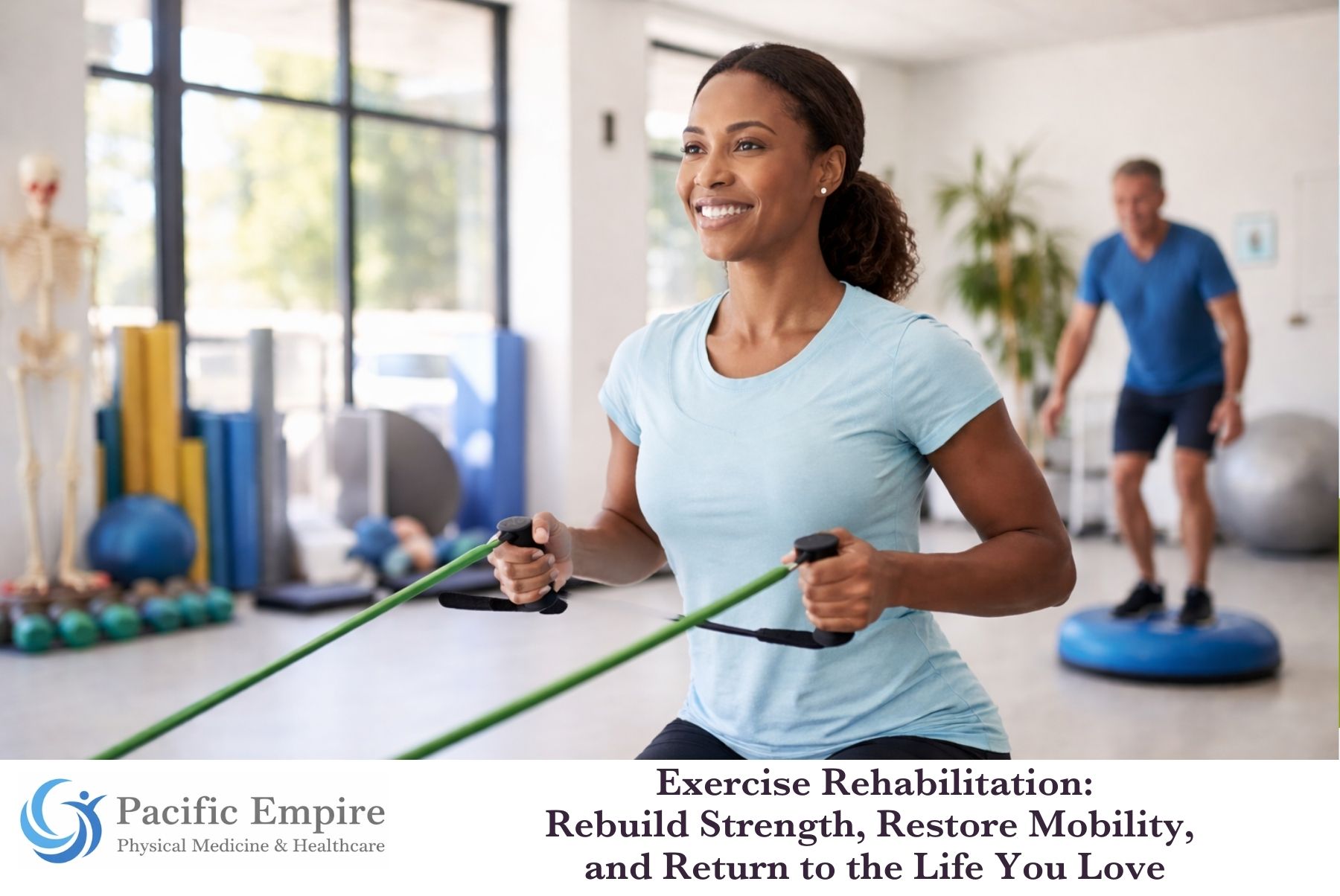
 Recovering from an injury, surgery, or chronic pain condition often requires more than rest alone. Exercise rehabilitation is a structured and medically guided approach that helps patients rebuild strength, improve mobility, and restore physical function safely. Through targeted exercises and professional supervision, individuals can accelerate recovery, prevent future injuries, and return to their daily activities with confidence.
At Pacific Empire Physical Medicine & Healthcare, patients receive personalized exercise rehabilitation programs designed to support healing, improve movement, and promote long-term wellness.
What Is Exercise Rehabilitation?
Exercise rehabilitation, often called rehab exercise or therapeutic exercise, is a treatment approach that uses specific physical activities to restore the body’s natural movement and strength after injury, illness, or chronic pain.
Unlike general fitness workouts, rehabilitation exercises are carefully designed by healthcare professionals to target affected muscles, joints, and tissues while minimizing strain or risk of further injury.
These programs may include:
- Strength training exercises
- Flexibility and stretching routines
- Balance and coordination training
- Posture correction
- Functional movement exercises
- Low-impact cardiovascular conditioning
The goal is to restore optimal movement, reduce pain, and help the body heal properly.
Why Exercise Rehabilitation Is Important
Many injuries or pain conditions cause muscles and joints to weaken or become restricted. Without proper rehabilitation, patients may develop long-term mobility issues or recurring injuries.
Exercise rehabilitation helps:
- Restore muscle strength
- Improve flexibility and joint mobility
- Reduce pain and inflammation
- Enhance balance and coordination
- Improve posture and movement mechanics
- Prevent re-injury
- Support faster recovery after surgery or injury
A structured rehabilitation plan ensures that patients progress safely through each stage of recovery.
Conditions That Benefit From Exercise Rehabilitation
Exercise rehabilitation is beneficial for a wide range of conditions and injuries.
Common conditions treated with rehab exercises include:
Sports Injuries
Athletes frequently experience strains, sprains, tendon injuries, and overuse conditions. Rehabilitation helps restore performance and reduce the risk of future injury.
Back and Neck Pain
Targeted exercises strengthen core muscles and stabilize the spine, helping relieve chronic or recurring back and neck discomfort.
Joint Injuries
Knee, shoulder, hip, and ankle injuries often require rehabilitation to restore proper joint function.
Post-Surgical Recovery
Patients recovering from orthopedic surgeries such as knee or shoulder procedures often benefit from guided exercise rehabilitation.
Arthritis and Joint Degeneration
Exercise can improve joint mobility and reduce stiffness, helping patients maintain independence and comfort.
Workplace Injuries
Rehabilitation programs help individuals safely return to work following physical injuries.
What to Expect During an Exercise Rehabilitation Program
At Pacific Empire Physical Medicine & Healthcare, exercise rehabilitation begins with a thorough evaluation of each patient’s condition, medical history, and movement limitations.
Step 1: Comprehensive Assessment
A healthcare professional evaluates:
- Range of motion
- Muscle strength
- Posture
- Movement patterns
- Pain levels
- Functional limitations
This evaluation helps determine the most effective treatment plan.
Step 2: Personalized Exercise Plan
Based on the assessment, a customized rehabilitation program is developed. The program is tailored to the patient’s condition, goals, and physical ability.
Step 3: Guided Exercise Sessions
Patients perform exercises under professional supervision to ensure proper form, safety, and effectiveness.
Step 4: Progressive Strength and Mobility Training
As healing progresses, exercises are gradually adjusted to increase strength, endurance, and flexibility.
Step 5: Long-Term Prevention
Patients often receive guidance on home exercises and lifestyle adjustments to maintain results and prevent future injuries.
Key Components of Exercise Rehabilitation
A comprehensive rehabilitation program typically includes several types of exercises.
Strengthening Exercises
These exercises target weakened muscles to improve support and stability for joints and the spine.
Flexibility and Stretching
Stretching improves range of motion and reduces stiffness in muscles and joints.
Core Stabilization
Strong core muscles help support the spine and reduce strain on the back and neck.
Balance and Coordination Training
These exercises improve body awareness and reduce the risk of falls or re-injury.
Functional Movement Training
Functional exercises mimic everyday movements such as bending, lifting, or walking to help patients return to daily activities.
Benefits of Professional Exercise Rehabilitation
While general exercise can be beneficial, guided rehabilitation programs offer several advantages.
Safe Recovery
Professional supervision ensures exercises are performed safely and appropriately for the injury or condition.
Faster Healing
Targeted exercises stimulate circulation and promote tissue repair.
Reduced Risk of Re-Injury
Rehabilitation strengthens the muscles and joints that support injured areas.
Improved Physical Function
Patients often regain strength, mobility, and flexibility that may have been lost.
Long-Term Wellness
Patients learn strategies for maintaining musculoskeletal health and preventing future problems.
Exercise Rehabilitation Q&A
What is the difference between exercise rehabilitation and regular exercise?
Exercise rehabilitation is medically guided and designed to address specific injuries or conditions. Regular exercise is more general and may not be appropriate during injury recovery.
Who can benefit from exercise rehabilitation?
Anyone recovering from injury, surgery, chronic pain, or musculoskeletal conditions can benefit from a structured rehabilitation program.
Is exercise rehabilitation painful?
Rehabilitation exercises are designed to promote healing without causing unnecessary pain. Some mild discomfort may occur as muscles strengthen, but programs are adjusted to ensure patient comfort.
How long does an exercise rehabilitation program last?
The length of a program varies depending on the injury or condition. Some patients may see improvement within a few weeks, while others may require longer treatment plans.
Can exercise rehabilitation help chronic back pain?
Yes. Strengthening the core muscles and improving posture can significantly reduce back pain and prevent future episodes.
Do I need supervision during rehab exercises?
Supervision is highly recommended, especially early in recovery, to ensure exercises are performed correctly and safely.
Will I receive exercises to do at home?
Yes. Many rehabilitation programs include home exercises to help patients maintain progress between appointments.
Can rehabilitation exercises prevent future injuries?
Absolutely. Strengthening muscles, improving flexibility, and correcting movement patterns help reduce the risk of future injuries.
Start Your Recovery with Exercise Rehabilitation
If you’re recovering from an injury, dealing with chronic pain, or looking to restore mobility and strength, exercise rehabilitation can be an effective solution.
The experienced team at Pacific Empire Physical Medicine & Healthcare is dedicated to helping patients regain function, improve movement, and return to an active lifestyle through personalized rehabilitation programs.
Contact Information
Pacific Empire Physical Medicine & Healthcare
4590 Riverside Dr STE B
Chino, CA 91710
📞 Phone: (909) 464-9880
🌐 Website:
https://pacificempirechiropractic.com
📅 Request an Appointment:
https://pacificempirechiropractic.com/appointments/