
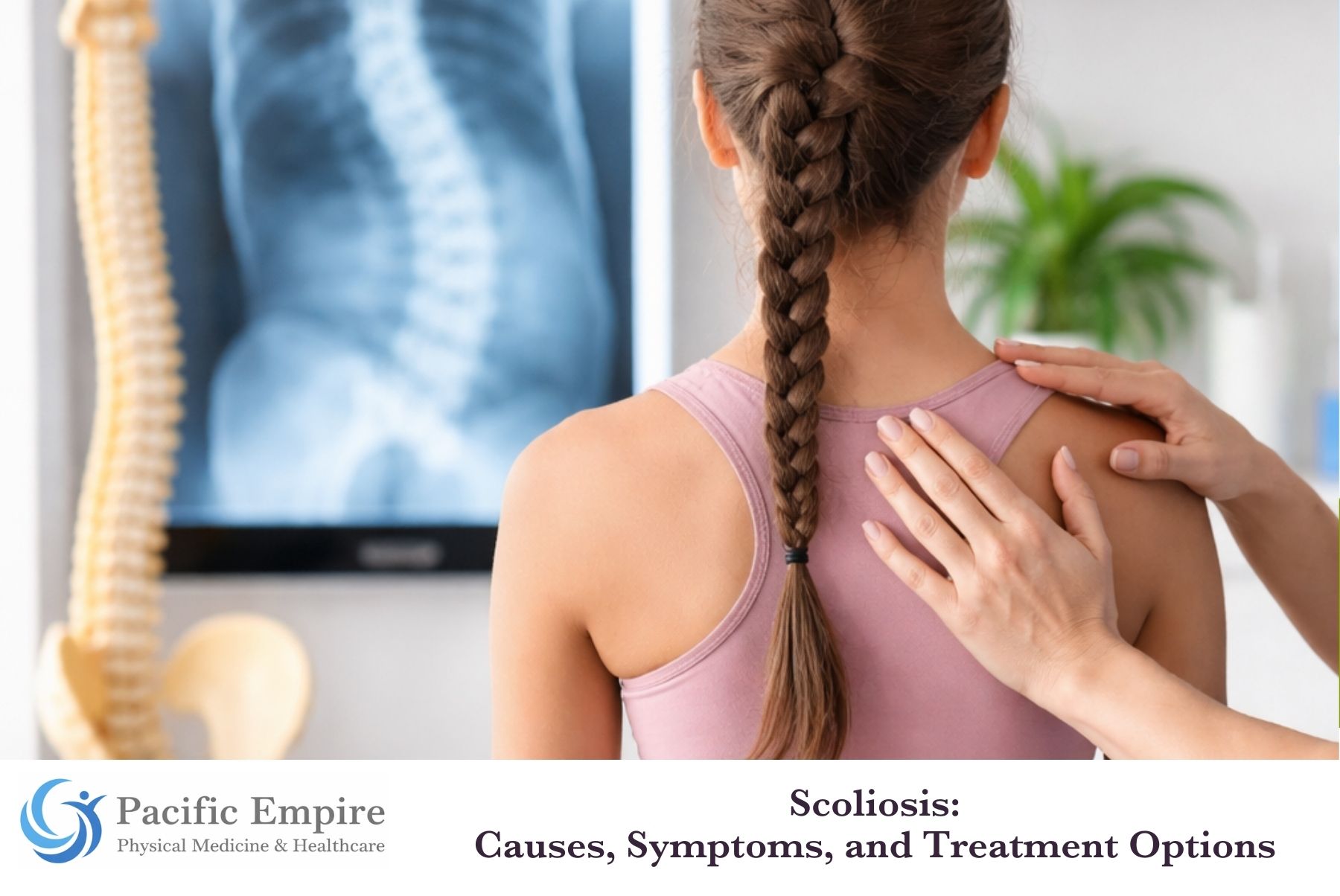
 Scoliosis is a condition that affects the natural alignment of the spine, causing it to curve sideways rather than maintaining a straight vertical position. While mild cases may cause little discomfort, more severe cases can impact posture, mobility, and overall quality of life. Early detection and proper treatment are key to preventing progression and reducing long-term complications.
At Pacific Empire Physical Medicine & Healthcare, patients receive comprehensive evaluation and personalized care designed to address scoliosis and related spinal conditions. Through a combination of advanced diagnostic techniques, chiropractic care, rehabilitative therapy, and lifestyle guidance, the team focuses on helping patients restore function, reduce discomfort, and improve spinal health.
What Is Scoliosis?
Scoliosis is a spinal condition characterized by an abnormal sideways curvature of the spine. Instead of appearing straight when viewed from the back, the spine may form an “S” or “C” shape.
Although scoliosis is often diagnosed in children and adolescents, it can also develop in adults due to degenerative changes in the spine. The condition varies in severity, ranging from mild curves that require monitoring to more pronounced curves that may require treatment.
Common Causes of Scoliosis
There are several types of scoliosis, each with different underlying causes.
Idiopathic Scoliosis
This is the most common form, particularly in adolescents. The exact cause is unknown, though genetics may play a role.
Congenital Scoliosis
This type occurs due to abnormal spinal development before birth.
Neuromuscular Scoliosis
Conditions such as cerebral palsy or muscular dystrophy can affect the muscles supporting the spine, leading to curvature.
Degenerative Scoliosis
Often seen in adults, this occurs when age-related changes in the spine cause it to curve.
Signs and Symptoms of Scoliosis
Many people with mild scoliosis may not notice symptoms right away. However, as the curve progresses, several physical changes may appear.
Common signs include:
- Uneven shoulders
- One hip higher than the other
- One shoulder blade protruding more than the other
- Visible curvature of the spine
- Back pain or stiffness
- Muscle fatigue
- Limited mobility in severe cases
Early evaluation is important because scoliosis tends to progress if left untreated.
How Scoliosis Is Diagnosed
Diagnosis typically begins with a physical examination and a review of medical history. During the exam, a healthcare provider may ask the patient to bend forward to observe spinal alignment.
Additional diagnostic tools may include:
- X-rays to measure the degree of spinal curvature
- Postural analysis
- Functional movement testing
At Pacific Empire Physical Medicine & Healthcare, a thorough evaluation helps determine the severity of the curve and guides the development of a personalized treatment plan.
Treatment Options for Scoliosis
Treatment for scoliosis depends on factors such as the patient’s age, the severity of the curve, and whether the condition is progressing.
Chiropractic Care
Chiropractic adjustments can help improve spinal alignment, reduce joint restrictions, and relieve tension in surrounding muscles.
Corrective Exercises
Targeted exercises strengthen the muscles supporting the spine and promote better posture.
Physical Therapy
Therapeutic rehabilitation may help increase mobility, reduce pain, and support spinal stability.
Postural Training
Improving posture habits can reduce strain on the spine and help prevent progression.
Ongoing Monitoring
For mild cases, regular checkups allow healthcare providers to monitor spinal changes and intervene early if needed.
The team at Pacific Empire Physical Medicine & Healthcare develops individualized treatment strategies designed to improve spinal function and overall wellness.
Q&A: Frequently Asked Questions About Scoliosis
What causes scoliosis?
In many cases, especially in adolescents, the exact cause is unknown (idiopathic scoliosis). Other causes may include birth defects affecting the spine, neuromuscular conditions, or age-related degeneration.
At what age is scoliosis usually diagnosed?
Scoliosis is most commonly diagnosed between ages 10 and 15, during growth spurts in adolescence. However, adults can develop scoliosis later in life due to spinal degeneration.
Can scoliosis get worse over time?
Yes. If left untreated, spinal curves may progress, especially during periods of rapid growth or due to age-related degeneration.
Does scoliosis always cause pain?
Not always. Many people with mild scoliosis experience little to no pain. However, moderate to severe curves may lead to discomfort, muscle fatigue, and reduced mobility.
Can scoliosis be corrected without surgery?
Many cases can be managed effectively with non-surgical treatments, including chiropractic care, exercise therapy, and posture correction. Early intervention often leads to better outcomes.
How is scoliosis measured?
Scoliosis is measured using the Cobb angle, which determines the degree of spinal curvature seen on X-rays.
Can adults develop scoliosis?
Yes. Adults may develop degenerative scoliosis as the spine changes due to aging, disc degeneration, or arthritis.
What happens if scoliosis is left untreated?
Untreated scoliosis can lead to worsening curvature, chronic back pain, reduced mobility, and postural imbalance. In severe cases, it may impact breathing or organ function.
Can exercise help scoliosis?
Yes. Strengthening and stabilization exercises can support the spine, improve posture, and reduce symptoms.
When should someone seek treatment for scoliosis?
If you notice uneven shoulders, persistent back pain, or changes in posture, it is important to seek evaluation from a healthcare professional for proper diagnosis and guidance.
Scoliosis Care at Pacific Empire Physical Medicine & Healthcare
Living with scoliosis can be challenging, but with the right treatment approach, many patients are able to manage symptoms and maintain an active lifestyle. At Pacific Empire Physical Medicine & Healthcare, the focus is on identifying the root cause of spinal issues and creating personalized treatment plans tailored to each patient’s needs.
Through a combination of chiropractic care, rehabilitation therapies, and patient education, the clinic helps individuals improve spinal health and enhance their overall quality of life.
If you are experiencing back discomfort, posture changes, or have concerns about scoliosis, professional evaluation can help you understand your options and take the next step toward better spinal health.
Contact Pacific Empire Physical Medicine & Healthcare
Pacific Empire Physical Medicine & Healthcare
4590 Riverside Dr STE B
Chino, CA 91710
📞 Phone: (909) 464-9880
🌐 Website: pacificempirechiropractic.com
📅 Request an Appointment: pacificempirechiropractic.com/appointments/